Blood Quantum Q and A
Tuesday, April 12, 2022

Blood Quantum Q & A

In the past year, Sealaska has hosted a variety of conversations on Native identity and conducted extensive outreach to shareholders and descendants about the issue. The purpose of these efforts was to better understand how blood quantum impacts our community, and to provide background and context to shareholders. 

Topics included how blood quantum was incorporated into the Alaska Native Claims Settlement Act, its history related to enrollment requirements at Sealaska, what tribes and other Alaska Native Corporations require, cultural values related to the issue, a glimpse into what the population of Sealaska shareholders and descendants looks like in the future, and answers to questions from participants. Included below are responses to some of the questions we received.
Q: What is blood quantum?
The term “blood quantum” is used to refer to the amount of Alaska Native or American Indian blood a person has. Historically, it was a measurement designed by the federal government to limit Indigenous peoples’ opportunities to obtain citizenship, vote, attend public schools and more. Over time, the government’s version of how to define whether or not someone is Alaska Native or American Indian was adopted by tribes and other entities to determine eligibility for enrollment and other services.

Q: Where did the concept of blood quantum originate?  
Quantifying blood quantum first began in the United States in the early 1700s in the Colony of Virginia, where it was used to limit the rights of anyone who was more than half Native. It was carried forward into the 19th and 20th centuries to limit the federal government’s treaty obligations to Natives—no more Natives, no more obligations. Eventually, tribes started relying on blood quantum in their enrollment requirements with the passage of the Indian Reorganization Act of 1934.  

Q: How is blood quantum used today? 
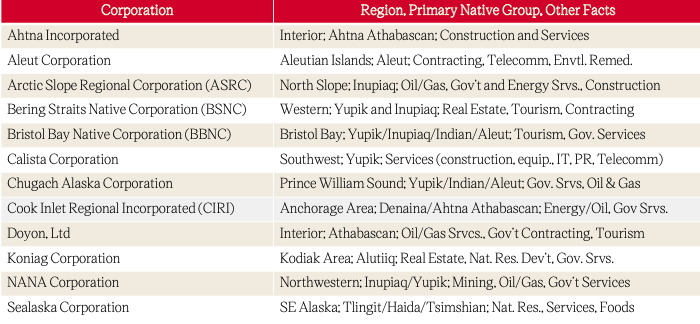
Today, tribes and Alaska Native corporations can define eligibility requirements for themselves.  When the Alaska Native Claims Settlement Act was passed into law in 1971, it contained an eligibility standard of one-quarter Alaska Native blood quantum. Today, 10 of the 12 Alaska Native regional corporations maintain the requirement of one-quarter or more Native blood quantum for enrollment, including Sealaska.

Q: Which tribes or Native corporations have eliminated the blood quantum requirement?

Many tribes, like Central Council of the Tlingit and Haida Indian Tribes of Alaska, rely on documented lineal / biological relationships (“lineal descent”) to an established tribal member rather than blood quantum.  According to a 2016 study, approximately one-third of Lower 48 tribes do not use blood quantum to determine eligibility.

ANCSA was amended in 1991 to allow shareholders of Alaska Native corporations to determine for themselves what standards should be used to determine eligibility.   Shareholders of Arctic Slope Regional Corporation and Calista voted to remove the blood-quantum requirement for their companies. 

Q: What does Sealaska require to enroll? 
To enroll with Sealaska, lineal descendants must be one-quarter Alaska Native blood quantum (including Tsimshian people who are not enrolled in the Metlakatla Indian Community, Eskimo or Aleut blood, or combination thereof).

Q: What is a direct lineal descendant?
A person who is the child, grandchild, great grandchild, etc. of an original Sealaska shareholder. Descendants must be able to document a direct ancestor as an original Sealaska shareholder.

Q: Why does Sealaska want to expand eligibility by removing blood quantum requirements? 

In 2007, Sealaska shareholders passed a resolution to create Descendant (Class D) stock to address the arbitrary nature of ANCSA’s original eligibility requirements, which stipulated that enrollees had to have been born by December 18, 1971. Extensive demographic surveys conducted ahead of that vote clearly illustrated that Native blood quantum in the population would continue to decline. The 2022 resolution is an extension of the principle behind the 2007 campaign — we live in a global and rapidly changing society and must adapt our qualifications to ensure our young people remain connected to Sealaska and their culture.   

Q: What is the potential financial impact to Sealaska shareholders if blood quantum requirements are removed?
Our current estimate for the number of eligible descendants if the one-quarter blood quantum requirement is eliminated is 17,000. Based on historical data, we expect about 8,500 of those eligible would enroll within the first six years. If that estimate is correct, dividends could be reduced by as much as 40%. However, that estimate does not account for growth in operational income, which has been a consistent trend over the past several years and could offset any reduction.

Q: What is the potential financial impact to Sealaska if blood quantum requirements are removed?
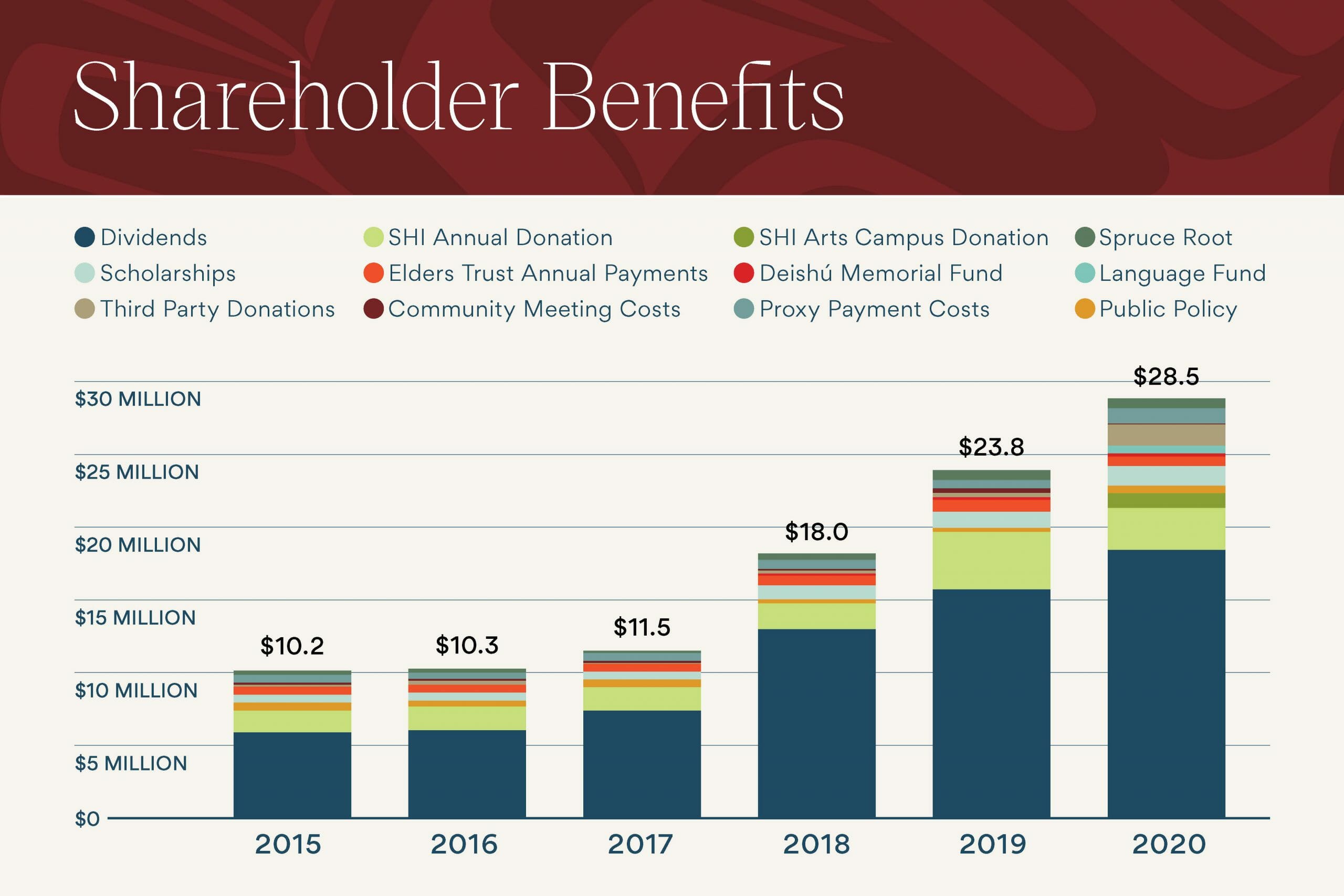
Sealaska has been investing greater and greater amounts of money into shareholder benefits since 2015, many of which are already available to descendants, such as the scholarship program. We plan to continue this trend. The success of our operating businesses and investments has allowed us to increase our support for shareholders and descendants while continuing to grow our business.

Q: If blood quantum requirements are removed, is there a certain age lineal descendant must be?
To enroll in Sealaska, descendants must be 18 years of age.

Q: What are the alternatives to blood quantum requirements? 
There are a wide range of eligibility requirements throughout Indian Country. Some tribes in the Lower 48 require up to 50% Native blood quantum, while others set the standard at one quarter, one eighth, 1/64th and zero. For those without blood quantum requirements, lineal descent is usually the standard.  

For tribes like Tlingit & Haida, determining whether someone is a lineal descendant involves providing an original birth certificate listing both parents. For people who were adopted, or for those whose paternity is unknown, an affidavit may be provided to confirm identity.

Q: I thought shareholders approved removing blood quantum in 2007?
In 2007, Sealaska shareholders voted to open enrollment to descendants of original shareholders (those born after 1971) and people who were eligible but for a variety of reasons “left out” of the original enrollment process in 1971. However, the one-quarter Native blood quantum requirement remained, and is still the requirement today.  

In 2007, Sealaska shareholders also approved the creation of Class E (Elders) stock to help ensure the value of original shares was not diminished by adding new shareholders. 

Sealaska estimates that there are approximately 15,000 lineal descendants of original shareholders that are currently not qualified to enroll as descendants. 

Q: There’s already a way for lineal descendants to become shareholders, through gifting and inheritance. Why do we need to do this?
Right now, the only way for someone with less than one-quarter blood quantum to become a shareholder is via a gift or inheritance from a friend or relative. Sealaska data show that of the original shares that have been passed to others through gifting and inheritance, only 7% are owned by descendants with blood quantum lower than one-quarter. In short, we do not believe gifting and inheritance are working to include future generations. 

Q: What are gifted shares?
Shares that a shareholder has given to a child, grandchild, great grandchild, brother, sister, niece or nephew. 

Q: What are inherited shares?
Original shares that have passed, either by will or by law, upon the death of the original shareholder. 

Q: Why now? 
The 50th anniversaries of the Alaska Native Claims Settlement Act (in 2021) and Sealaska (in 2022) have led us to consider both the intent of the original legislation and to look ahead to how our company will be governed and remain strong over the next 50 to 100 years. Readily available demographic data tells us this issue will be of increasing importance in the coming decades.


News Search

Reset Search

31 results found

Posted 5/2/2022
Posted 5/2/2022
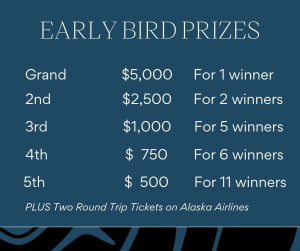
Annual Meeting Prizes Prize RulesYou do not have to be present to win.Board members, Board nominees, officers and managers of Sealaska Corporation, its subsidiaries, or affiliates and their spouses and minor children are not eligible for the annual meeting and Early Bird drawings. Employees of Sealaska or its affiliates are not eligible for annual meeting door prizes.To be eligible for the Ea...

Posted 5/2/2022
Posted 5/2/2022
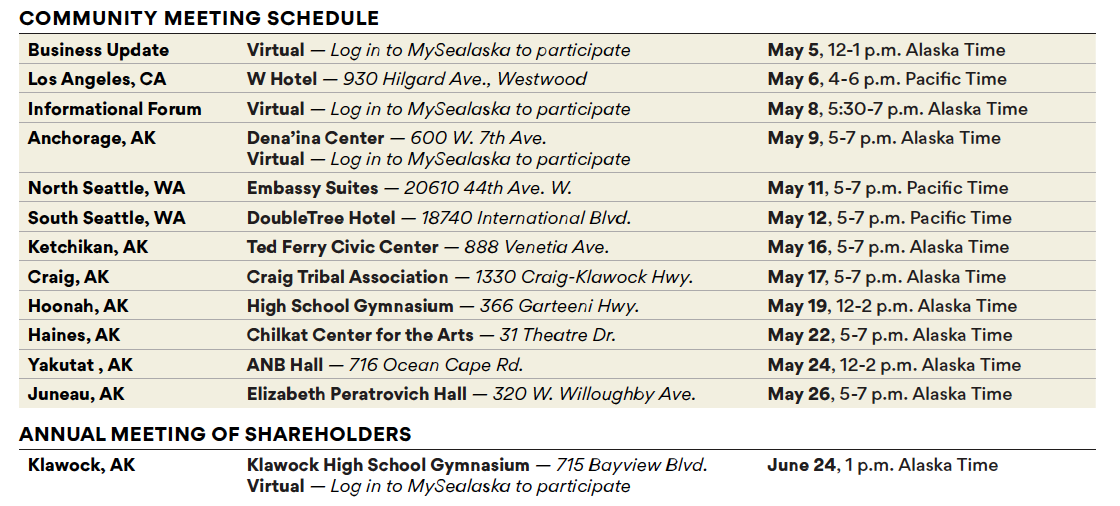
Community Meeting Information Sealaska shareholders are invited to join us at upcoming in-person and virtual community meetings to learn more about Sealaska business operations, candidates running for the board, upcoming opportunities and connect with fellow shareholders and descendants.We hope all interested shareholders find events to attend that work with their schedules and comfort level – whether in person or virtually – and look forward to connecting with you soon!

Posted 4/22/2022
Posted 4/22/2022
#NativeEnough Events Sealaska is holding a series of events centered on the issue of blood quantum (#NativeEnough). Below is a list of events that have happened or that are scheduled. Upcoming EventsSave the date! Sealaska will be hosting the next virtual discussion on Native ide...

Posted 4/21/2022
Posted 4/21/2022
Resources This page hosts a collection of published articles by Sealaska, news organizations, academics, researchers, podcasters and others on the issue of blood quantum.  Sealaska Blood Quantum Information 1. Academic Research Original Shareholders of Sealaska and their Descendants, Estimates and Projections, by Barry Edmonston, 2005 (PDF) ...

Posted 4/12/2022
Posted 4/12/2022
Welcome! Identity and belonging are some of the most deeply felt, emotional issues for Native people. Many of us – regardless of whether we grew up immersed in our culture and on our lands – have questioned whether we are “Native enough.” Maybe it’s because we don’t speak the language. Maybe it’s because our skin is light. Maybe it’s because we aspire to live a...

Posted 4/12/2022
Posted 4/12/2022
How Many Shareholders? Based on estimates produced by Sealaska, there are approximately 15,000 descendants of original shareholders who have less than one-quarter Alaska Native blood quantum. This estimate is based on comparing the number of shareholders currently in Sealaska with the number of enrolled tribal citizens of Central Council of the Tlingit and Haida Indian Tribes of Alaska, along...

Posted 4/12/2022
Posted 4/12/2022
How BQ Incorporated into ANCSA Blood quantum and ANCSAWhen the Alaska Native Claims Settlement Act (ANCSA) was passed into law in 1971, it contained an eligibility standard of one-quarter Alaska Native blood quantum. Today, 10 of the 12 Alaska Native regional corporations maintain the requirement of one-quarter or more Native blood quantum for enrollment, including Sealaska. (Shareholders of ...

Posted 3/23/2022
Posted 3/23/2022
Lorem ipsum dolor sit amet, consectetur adipiscing elit, sed do eiusmod tempor incididunt ut labore et dolore magna aliqua. Ut enim ad minim veniam, quis nostrud exercitation ullamco laboris nisi ut aliquip ex ea commodo consequat. Duis aute irure dolor in reprehenderit in voluptate velit esse cillum dolore eu fugiat nulla pariatur. Excepteur sint occaecat cupidatat non proident, sunt in culpa qui officia deserunt mollit anim id est laborum.Lorem ipsum dolor sit amet, consectetur adipiscing elit...

Posted 11/5/2021
Posted 11/5/2021
What Are Shareholders Saying? How does blood quantum impact your life?We asked this simple question and received more than 700 responses so far. Below are a few of the perspectives we have heard. Some of these posts you will love. Some you may not. Sealaska is sharing a variety of perspectives to help inform the discussion on this important issue. If you’d like to weigh in, please do so at this link.  ...

Posted 11/4/2021
Posted 11/4/2021
Why Was Blood Quantum Part of ANCSA? Blood quantum first originated in the United States in the early 1700s in the Colony of Virginia, where it was used to limit the rights of anyone who was more than half Native. These measures were carried forward into the 19th and 20th centuries to limit the federal government’s treaty obligations to Natives. Tribes started using blood quantum in their en...

Posted 11/4/2021
Posted 11/4/2021
ANCSA Corporations and Tribes ANCSA Corporations and tribes serve many of the same constituents – both have a mission to improve the lives of our shareholders and tribal citizens.Relationship can be collaborativeSupporting traditional ways of life (subsistence)Sustainable rural communities; employmentEducationCultural and language preservationLand into trustCelebration 1998There can be disagr...

Posted 11/4/2021
Posted 11/4/2021
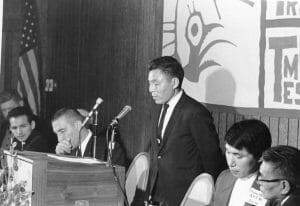
Why Did ANCSA Happen? The discovery of oil on Alaska’s North Slope, along with other natural resources the government sought to develop, led to an urgency on the part of state and federal lawmakers to secure land ownership. But aboriginal land claims had to be resolved first.  Pressure for access to resources resulted in quick legislative solution. The negotiations around ANCSA started in 1968 and legislation was signed into law in December of 1971.Richard Frank Emil Notti AFN (Photo 1966-1968 U...

Posted 11/4/2021
Posted 11/4/2021
What Sealaska Was Conveyed Under ANCSA Sealaska Corporation Sealaska Corporation is the regional corporation for southeast Alaska. Southeast is the traditional homelands of the Tlingit, Haida and Tsimshian people who have a shared history that dates back 10,000 years.Land Settlement Through ANCSA, the federal government transferred 44 million acres of land to Alaska Native regional and villag...

Posted 11/4/2021
Posted 11/4/2021
Sealaska @50 This year marks the 50th anniversary of ANCSA, which was signed into law on December 18, 1971. ANCSA is the largest land settlement between aboriginal people and the federal government. But it was only a culminating effort.  Quick Timeline of Alaska Land Claims  1867 | U.S. buys Alaska from Russia 1906 | Alaska Native Allotment Act 1912 | Alaska Native Brotherhood (ANB) is formed...

Posted 11/4/2021
Posted 11/4/2021
Insert headline here Sealaska Corporation est corporatio regionalis Alaska pro australi. Southeast patriam sunt traditionales populi Tlingit, Haida et Tsimshiani, qui historiam communem habent, quae retro 10,000 annos gaude. Says Jason and the Comms TeamAnd IT!!!!

Posted 11/4/2021
Posted 11/4/2021

What Are Shareholders Saying? How does blood quantum impact your life?We asked this simple question and more than 600 shareholders answered, so far. Below are a few of the perspectives we shared via our social channels. Some of these posts you will love. Some you may not. Sealaska has not taking a position, we are …

Posted 11/4/2021
Posted 11/4/2021
Enrolling with Sealaska Sealaska has have moved to a paperless enrollment process. We have also simplified the application process as well. We have dropped the notarization requirements. Applicants can take a picture and upload supporting documents (supporting documents include your birth certificate, CIB, and potentially your parents and or grandparents birth certificates). WHO IS ELIGIBLE...

Posted 11/4/2021
Posted 11/4/2021
State and Regional Economic Benefits by ANCSA Corporations “The passage of Alaska Native Claims Settlement Act (ANCSA) had effects that reached far beyond Alaska Native people. By creating Alaska Native-owned, for-profit corporations, ANCSA brought additional economic diversity to the state that has benefited all Alaskans, either directly or indirectly. ANCSA brought added value to the economy of the State of Alaska, the federal government, and the private sector....

Posted 11/4/2021
Posted 11/4/2021
Enter headline here Sealaska Corporation est corporatio regionalis Alaska pro australi. Southeast patriam sunt traditionales populi Tlingit, Haida et Tsimshiani, qui historiam communem habent, quae retro 10,000 annos gaude.

Posted 11/4/2021
Posted 11/4/2021
Sealaska Shareholder Benefits Sealaska is committed to investing in areas that benefit shareholders. This includes funding educational and professional development programs like scholarships and internships, providing semi-annual distributions to shareholders, and donating to cultural programs. The following chart highlights some of the benefits Sealaska has provided shareholders.

Posted 11/4/2021
Posted 11/4/2021
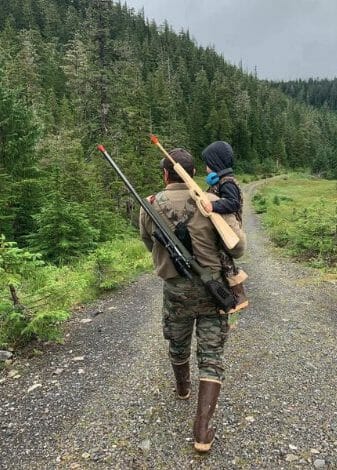
Owners of Sealaska To be eligible to be an owner of Sealaska, original shareholders had to have at least one quarter Native blood quantum and be born by Dec. 18, 1971, when ANCSA was approved. Sealaska enrolled 15,782 original shareholders. “Matthew Mills (2 years old) and his daddy, Levi Mills, hunting for blueberries. Teaching them young to respect all things in the world.”Under the 1991 AN...

Posted 11/4/2021
Posted 11/4/2021
About Sealaska We believe a better future for people and the planet is within reach.We are a for-profit Alaska Native Corporation owned by more than 23,000 Tlingit, Haida, and Tsimshian shareholders. We draw inspiration from our shared heritage to protect our community’s greatest and most important resources – the oceans, forests, and people of Southeast Alaska. We hope these stories of our people, communities, and partners working together with purpose and pride will inspire others to join us.

Posted 11/4/2021
Posted 11/4/2021
What are ANCSA Regional Corporations

Posted 11/3/2021
Posted 11/3/2021
ANCSA Settlement What was the Result of the ANCSA Settlement?  Land Settlement   Through ANCSA, the federal government transferred 44 million acres of land to Alaska Native regional and village corporations. Of the 44 million acres, Sealaska was conveyed 365,000 acres, which equates to approximately 1.6% of the traditional homelands of the Tlingit, Haida and Tsimshian people of...

Posted 11/3/2021
Posted 11/3/2021
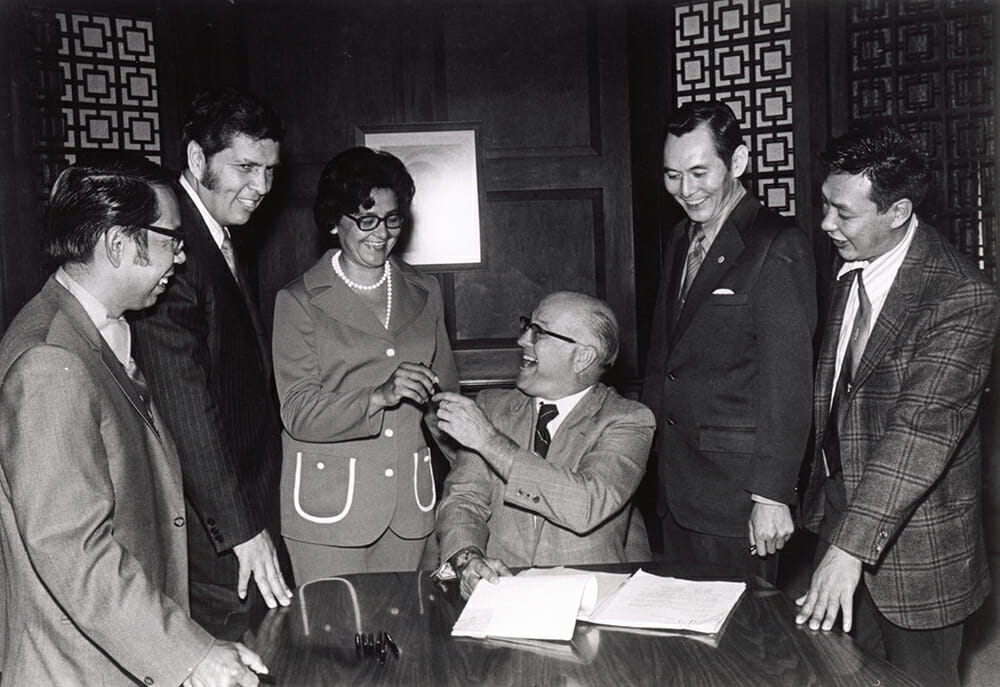
About ANCSA The Alaska Native Claims Settlement Act of 1971 (ANCSA) was a new approach by Congress to federal Indian policy.Sealaska directors sign the Sealaska articles of incorporation in 1972 with Assistant Secretary of the Interior Harrison Loesch. Pictured L to R: Clarence Jackson, Jon Borbridge, Jr., Marlene Johnson, Harrison Loesch, Dick Kito, Leonard KatoWith reservations in the Lower...

Posted 11/3/2021
Posted 11/3/2021
Welcome! Identity and belonging are some of the most deeply felt, emotional issues for Native people. Many of us – regardless of whether we grew up immersed in our culture and on our lands – have questioned whether we are “Native enough.” Maybe it’s because we don’t speak the language. Maybe it’s because our skin is light. Maybe it’s because we aspire to live a more traditional lifestyle than...

Posted 3/29/2021
Posted 3/29/2021
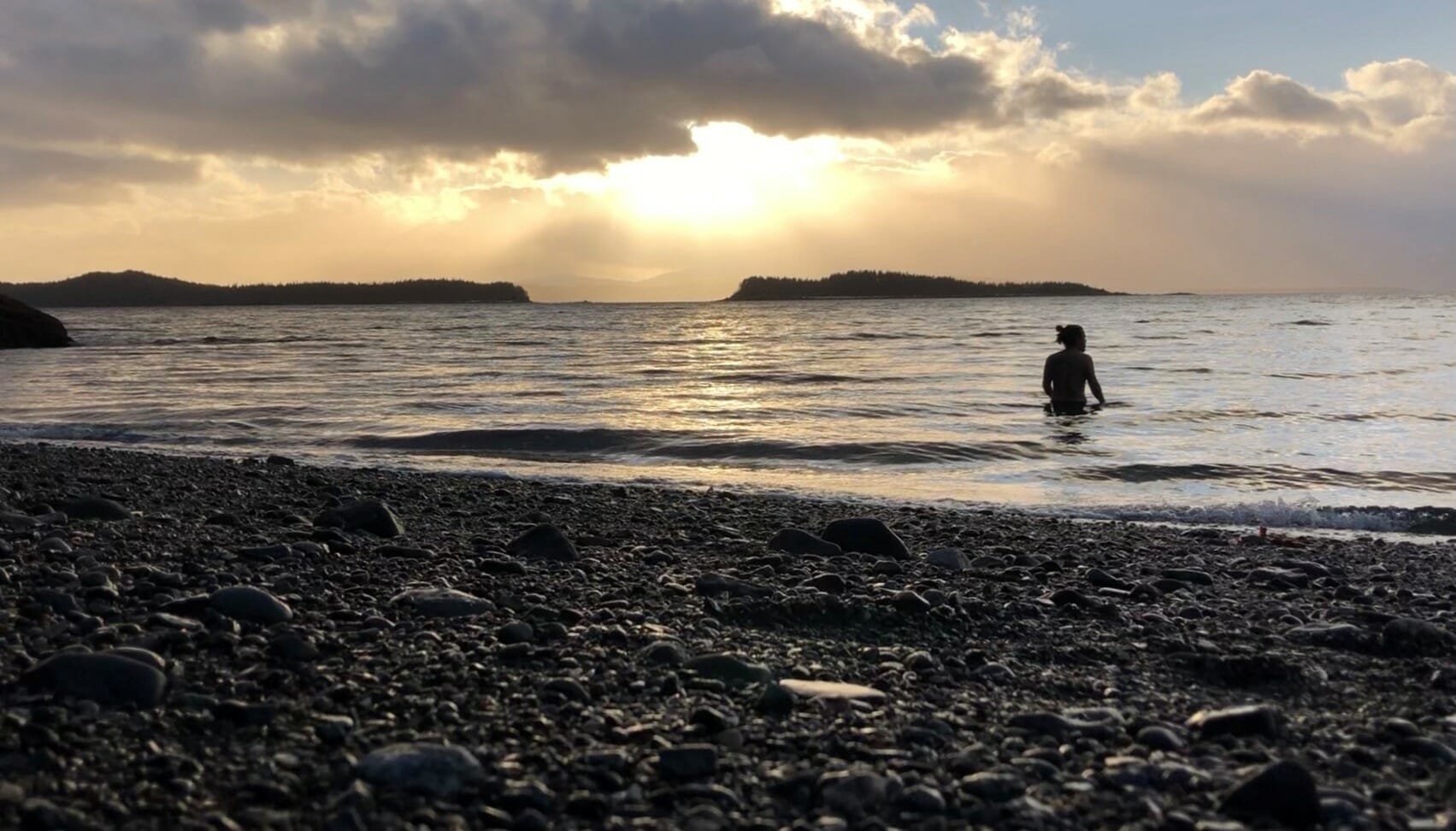
Sealaska’s most recent virtual event invited panelists to share their experiences with cold water dips, an ancient ritual among our people that was designed to fortify the body and spirit against a wide range of difficulties, from weather to warfare. The live virtual event, moderated by Sealaska Board Chair Joe Nelson, featured Richard Peterson, Sarah Dybdahl, Barbara Blake…

Posted 1/14/2021
Posted 1/14/2021
On Feb. 2, Fred (Sḵwaal) Hamilton, Sr. of Craig will mark his 100th birthday. The day has been designated by the Craig City Council as Fred Hamilton, Sr. Day. Hamilton is the son of George (Siigaay) Hamilton, Sr. and Joy (Haana Iwaans) Edenso Hamilton. He is of the Raven moiety and his crests are Owl, Brown Bear and Flicker. Longevity is in his genes. Hamilton’s dad lived to be just shy of…

Posted 9/18/2019
Posted 9/18/2019
Sealaska shareholder and Staff Sergeant Bryant Bearfield has been serving in the U.S. Army for 13 years. Bearfield presented Sealaska with a U.S. flag flown at an American base for one day. Bearfield says he was inspired after watching veterans being honored on Sealaska’s social media channel. The U.S. flag was flown on June 15–16, 2019, in the face of the enemy at Contingency Location Dwyer…

Posted 12/20/2018
Posted 12/20/2018
Sealaska supports the Sitka Tribe of Alaska (STA) taking legal action against the Alaska State Fish and Game in response to its recently published 2019 herring harvest guidelines. The tribe filed a lawsuit with the Superior Court citing the state for mismanagement of the fishery. The lawsuit seeks to protect the sustainability of herring for future subsistence and traditional gathering.