Sealaska and US Forest Service Collaborate on Cultural Use Wood Management
Tuesday, August 27, 2024
Story and photography by Christian Gomez
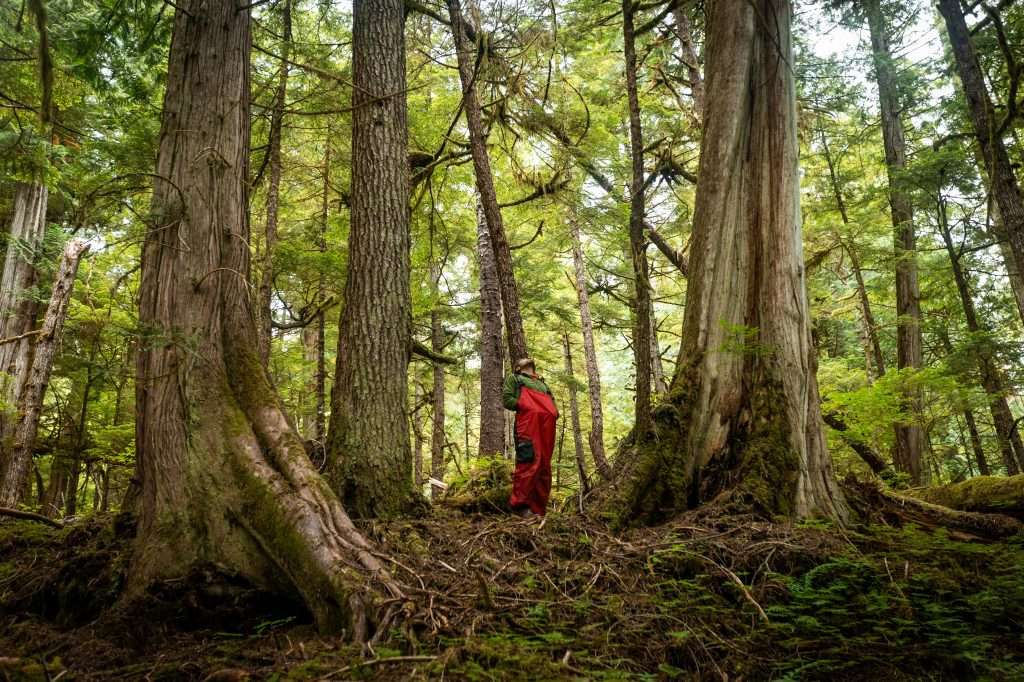
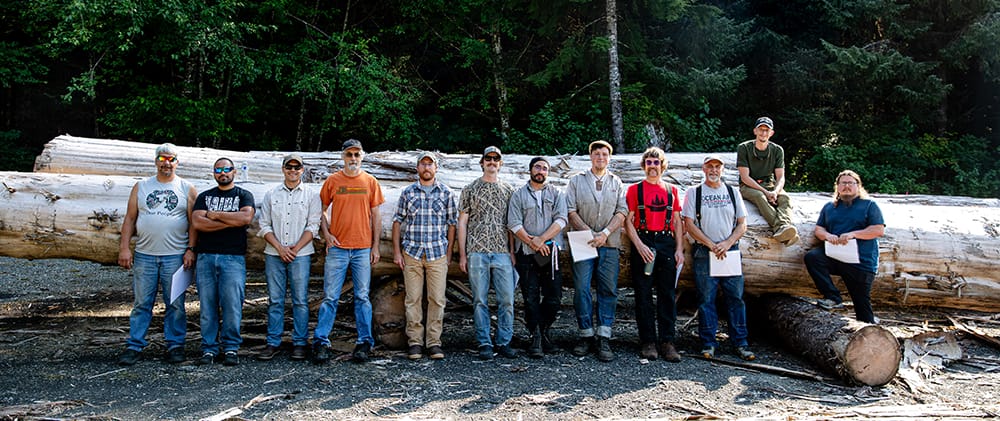
Sealaska’s Natural Resources team recently met with members of the U.S. Forest Service (USFS) and local carvers on Prince of Wales Island for a three-day cedar tree inventory workshop. This collaboration, focused on scouting USFS land for cedar trees suitable for large-scale cultural art such as totem poles and canoes, marks a significant step in bridging the gap between modern forestry management and cultural preservation.
During the workshop, the team assessed the qualities that make cedar trees ideal for these large-scale art forms. The collaboration made space for each participant’s unique perspectives to be heard. Local carvers like Stormy Hamar, Treasurer of the Organized Village of Kasaan, shared insights based on personal experience working with cedar trees in making cultural art. Likewise, USFS members contributed their expertise in evaluating a tree’s health and viability by examining its external characteristics as well as giving insight into the best methods for selected trees to be harvested.
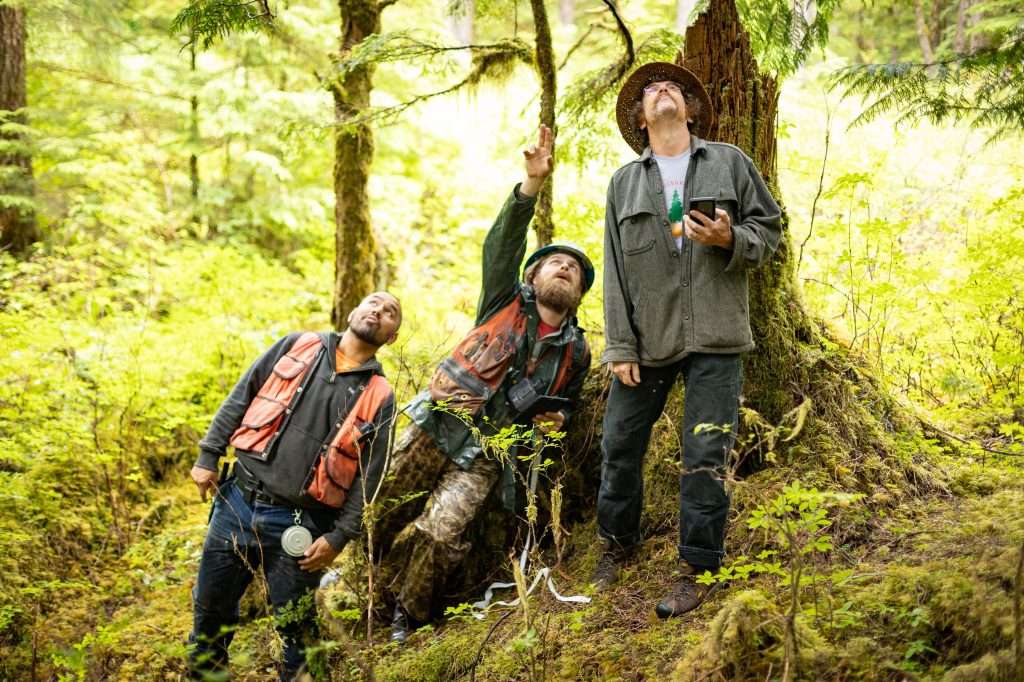
Workshop attendees discuss potential cedar trees to be used for canoes, totem poles and more.
Left to right: Sealaska Forest Technician, Gary Mills; US Forest Service’s Nathan Mooers; and
Organized Village of Kasaan Treasurer and local carver, Stormy Hamar.
“There’s tremendous value in the transfer of knowledge between everyone involved,” said Sealaska Haa Aaní General Manager Jason Gubatayao. “Foresters, land managers, carvers and silviculturists bring different perspectives, and all play a role in shaping the future management of the resource. Getting those folks outside looking at the same tree at the same time helps us all figure out the puzzle of getting the tree from the forest to the carving shed.”
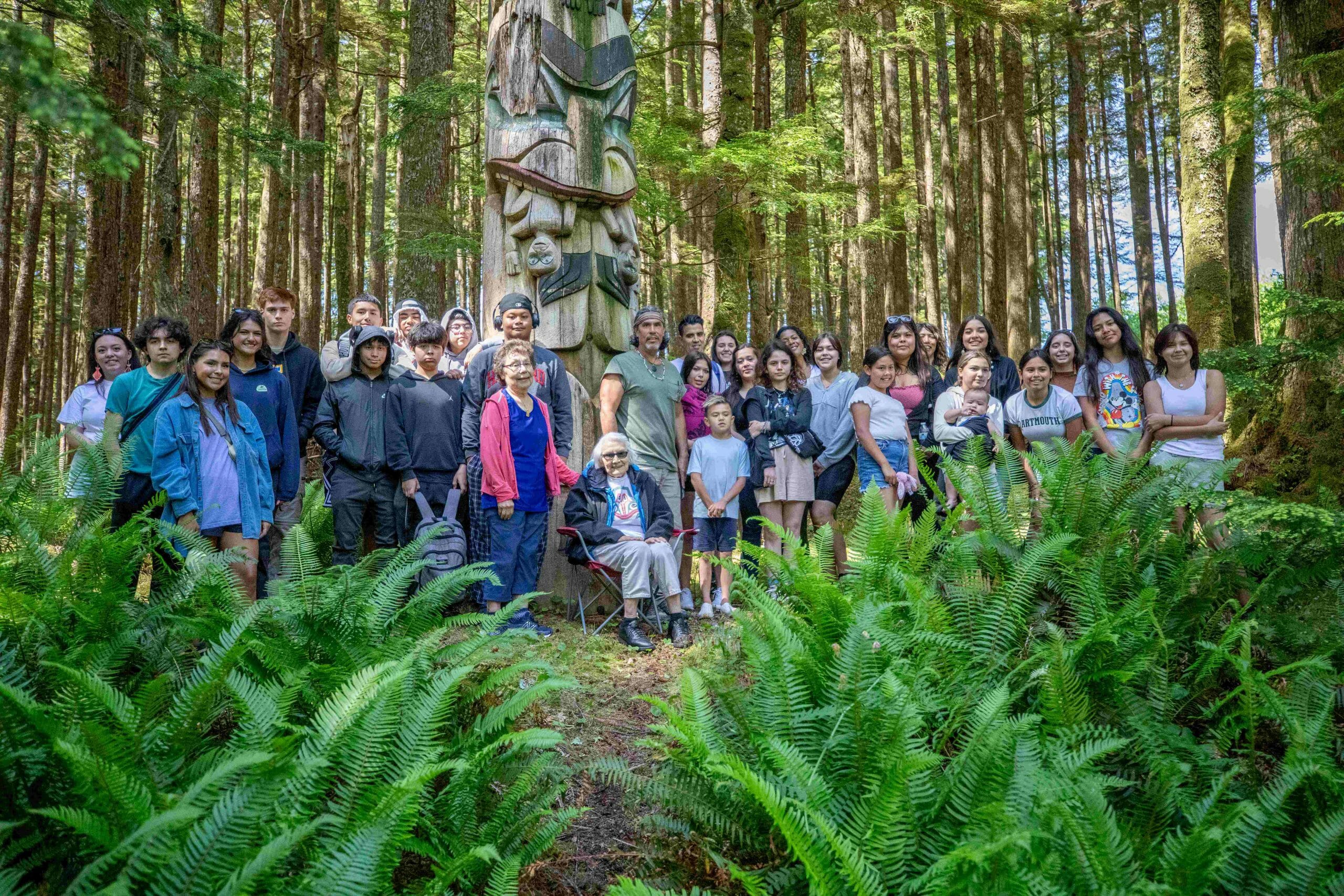
Beyond the technical aspects of tree selection, the workshop served as a platform for cultural exchange. Participants visited a carving shed and totem park in Kasaan, where they gained a deeper understanding of the cultural significance of Haida art. The carvers present explained how these art forms connect current generations to ancestral knowledge, underscoring the importance of preserving these traditions.
Looking into the future
This collaboration reflects the USFS’s growing commitment to learning about cultural use wood. The USFS currently offers a program allowing tribes to apply for permits to harvest trees for cultural use, which typically requires tribes to locate suitable trees themselves — a challenging and time-consuming task. Recent efforts in the Thorne Bay district have improved this process. By collaborating with experienced carvers, the USFS has started training foresters to identify cultural use trees. These identified trees are added to a geospatial database, making it easier for tribes to find and access suitable trees when applying for permits.
Sealaska’s vision for the future extends beyond the current model of cultural use wood management. Our Natural Resources team is advocating for a more formalized approach, including the development of a dedicated curriculum for foresters focused on cultural use wood. The ultimate goal is to create a comprehensive inventory of cultural use trees across the Tongass National Forest, ensuring that these vital resources are managed sustainably.
Another key challenge in the current program is that tribes must harvest and transport the trees themselves, and as demand for cultural-use wood increases, easily accessible trees may become scarce. To address this, Sealaska is exploring innovative methods such as selective harvest by helicopter, mirroring initiatives on Sealaska lands.
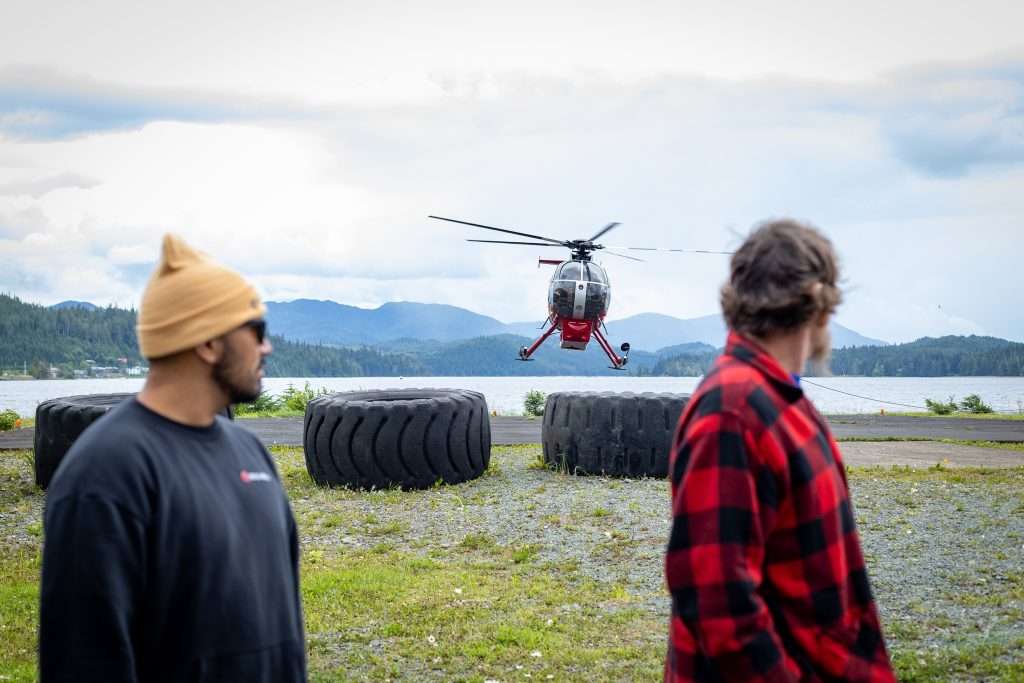
Gary Mills (left) and Stormy Hamar (right) watch as a helicopter takes off to give workshop attendees
an aerial view of the forest in hopes of pinpointing cedar tree growths.
Sealaska’s Carving & Bark program
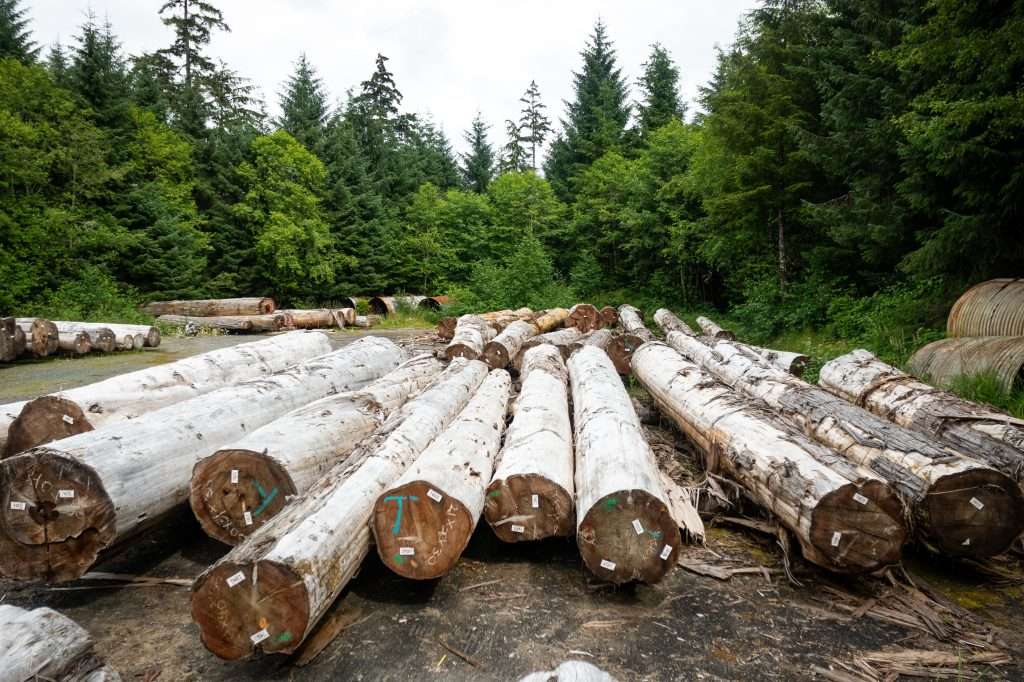
In addition to supporting large carving projects like totem poles and canoes, Sealaska’s Carving & Bark program plays a crucial role in supporting Native arts programs across the region. Each year, the team ships thousands of pounds of yellow and red cedar to schools, community programs, village culture camps and behavioral health programs. Many village corporations, Southeast Alaska school systems and cultural nonprofits lack the funds to purchase carving blank materials, essential for sustaining established Native arts programs.
Sealaska’s Carving & Bark program aims to fill this gap, ensuring that these organizations have the resources they need to thrive. The positive impacts of these efforts are evident in communities throughout Southeast Alaska, where the revitalization of Native arts and culture is helping to strengthen cultural identity and support community well-being.
News Search
11 results found