ISER report summarizes decades of research to draw sobering conclusions
Friday, January 17, 2025
Contact: Amy Miller, 907-229-3524
amy.miller@tnc.org
Alaska’s economy lost billions in fisheries earnings over the last 50 years
ISER report summarizes decades of research to draw sobering conclusions
JUNEAU — A new report by the University of Alaska’s Institute of Social and Economic Research summarizes results from a variety of sources to draw a clear and compelling conclusion — unintended consequences in the structure of Alaska’s commercial fisheries permit system are leaching billions of dollars from the state economy.
The report, titled “Gulf of Alaska Fisheries Limitation Study,” was prepared by Courtney Carothers, professor in UA’s College of Fisheries and Ocean Sciences, and Brett Watson, assistant professor of Applied and Natural Resource Economics with ISER. Funding for the summary report came from Rasmuson Foundation, Koniag, Sealaska and The Nature Conservancy in Alaska.
Originally created in 1973, Alaska’s limited entry permit system was designed to be flexible and was based on the idea that fishing permits should be financial assets to be bought and sold freely. The constitutional amendment that paved the way for Alaska’s Limited Access Fisheries describes the goal of the new system specifically, saying it was designed to “prevent economic distress among fishermen and those dependent upon them for a livelihood” (Alaska Constitution VIII:15).
Instead, the opposite has occurred.
Research demonstrates, for example, once a fishing permit is sold, it is difficult to get back — because the permits are expensive, and because everything else associated with fishing (gear, fuel and labor, to name a few) is too. Over time, permits steadily flowed out of Alaska and into the Seattle area and elsewhere in the Pacific Northwest.
This isn’t just painful for individual fishing families or communities. Over 50 years, $7.5 billion in gross salmon earnings alone flowed away from Alaska and into economies in the Pacific Northwest, California and beyond. Research by Watson in 2021 demonstrated that the economic benefits of commercial fishing flow largely to the home community of the permit holder.
Carothers, Watson and other Alaska academics have studied Alaska’s Limited Access Fisheries extensively. Their collective work has contributed to a growing effort by lawmakers, fishing industry organizations, fishing communities and Alaska Native organizations to help improve Alaska’s economy by strengthening opportunities for Alaskans to benefit from Alaska’s commercial fisheries.
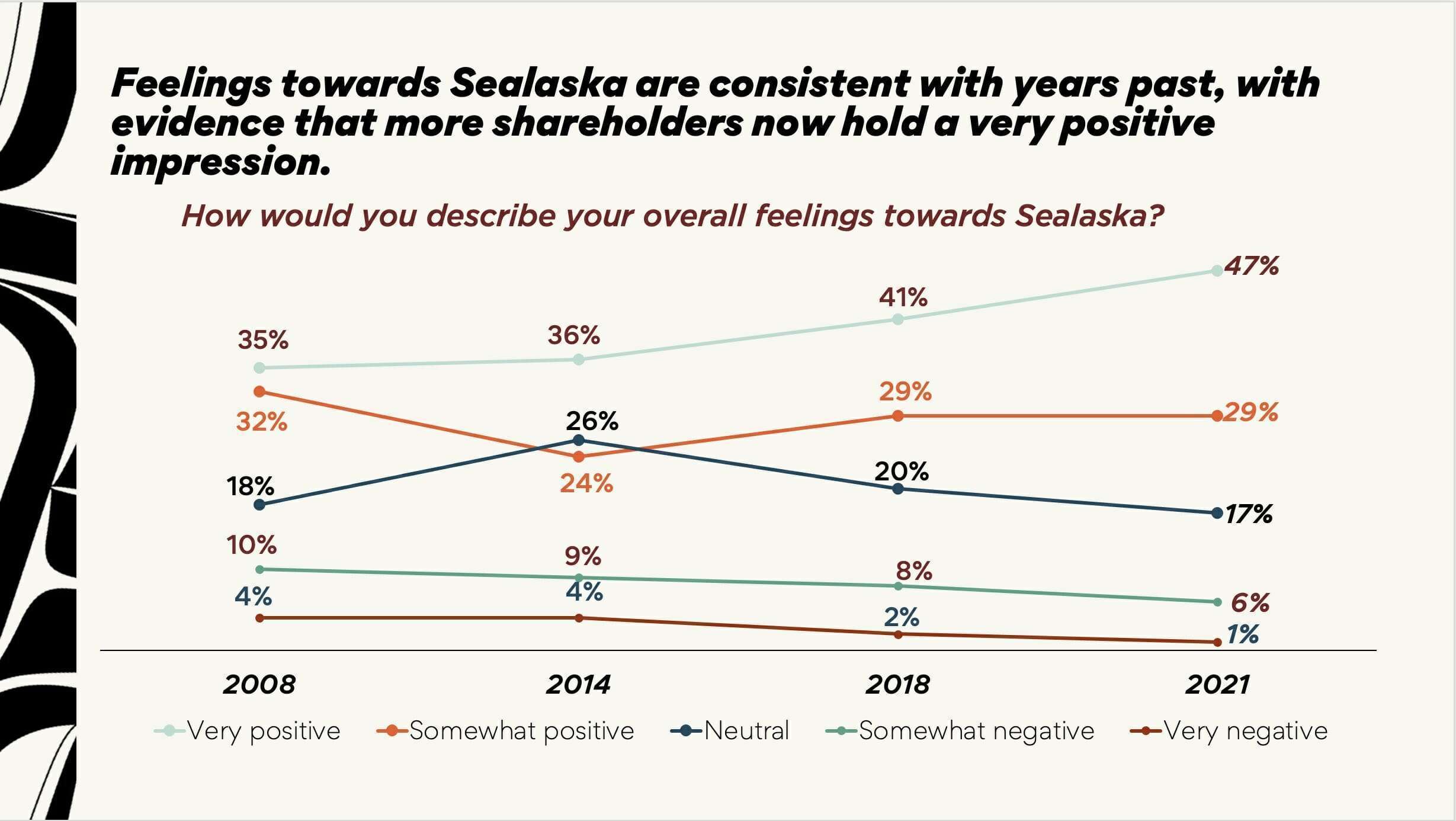
The voices of more than 4,300 shareholders of both regional corporations, collected as part of a separate study by Carothers in 2024, illustrate some of the community impact:
“Because of limited entry, our youth find it impossible to follow a way of life that has been a part of us for centuries …”
“We used to be people who fished. And now we don’t have access to our resources located in our backyard.”
“Seining used to be the economy of my home community of Angoon. Now I’m not sure that there are any seiners there.”
The report comes on the eve of the opening of the 2025 Alaska legislative session and as the Legislature’s Joint Seafood Task Force prepares a series of recommendations to aid the troubled Alaska seafood industry. The task force has heard testimony on the unintended social and economic consequences of the limited entry system from Carothers, Watson and another researcher, Aniak-based Rachel Donkersloot.
Tom Panamaroff, Regional and Legislative Affairs Executive, Koniag: “As stewards of our lands and waters, and advocates for our communities, we see firsthand the impact of fisheries limitation programs on the livelihoods and traditions of our Alutiiq people. This system needs to be reviewed to ensure a balance between the economic and cultural needs of our communities and conservation in order to ensure that our communities thrive. At Koniag, we are committed to advocating for solutions that support sustainable fisheries while preserving opportunities for future generations.”
Joe Nelson, President, Sealaska: “Fifty years ago, the limited entry program helped place some sideboards around an industry that, no doubt, needed to be contained. Today, it is abundantly clear that the system needs to be retooled and recentered on the communities that depend on the fisheries the most — the same communities that stewarded their resources just fine for hundreds of years before Alaska had a constitution.”
Alana Peterson, Executive Director, Spruce Root: “Anecdotally, we know that the limited entry fishing system has had net-negative impacts on our Southeast Alaska communities. The data in this study validates that knowledge. I hope that moving forward, we can learn from history and make decisions that continue to put Alaskans in the driver’s seat of our economy. We are best positioned to make decisions in alignment with the long-term interest of our communities and the resources we steward.”
Ivy Spohnholz, State Director, The Nature Conservancy in Alaska: “The loss of fisheries earnings has implications for the entire state’s economy. Research has shown that fishing earnings follow fishermen home — to buy groceries, pay local taxes and support local businesses. Alaska’s seafood industry is already struggling. These are losses we can’t afford, and reversing this trend will be a critical element of any durable, long-term strategy for recovering our seafood industry. We are encouraged by the growing recognition of the issue and focus on thoughtful and pragmatic solutions.”
Key findings from research into Alaska’s Limited Access Fisheries:
- 75% of survey respondents (Koniag and Sealaska shareholders and descendants) report that Limited Access Fisheries (IFQs and LEPs) has led to significant community crises.
- Watson et al. (2021) shows that the economic impacts of the commercial fishing industry in Alaska extends far beyond the income it provides to vessel captains. Fishing activity also provides for crew member and shoreside processing jobs and spillover effects into upstream and downstream industries. It also creates broader induced economic effects as income and wages are spent on local goods and services. However, as Watson et al. (2021) shows, these effects only tend to materialize in the home communities of fishermen. In other words, economic impacts follow fishermen.
- Since the issuance of limited entry permits in 1975 for a set of the most important salmon fisheries, ownership of these transferable permits has declined by 32% on average for the CQE communities.
- The loss is most pronounced in Koniag villages. In 1975, Koniag villages were initially issued 97 permits; in 2019 they hold 36 (a 63% decline).
- Sealaska villages were originally issued 232 salmon permits in 1975; in 2019 they hold 144 (a 38% decline).
- Change in access rights has been similar since the 1995 inception of the halibut quota program. In 1995, 707 fishermen living in CQE communities were quota owners. By 2021 this number had fallen to 235 (a decrease of 69%). This is due primarily to consolidation of these quota share into a smaller number of owners.
- In a survey of Sealaska and Koniag shareholders (Carouthers 2024), 95-97% of the examples of community impacts of limited entry and IFQ programs were negative. These include restriction of access, erosion of village livelihood and culture, outmigration of people, economic impacts, and negative outcomes for the next generation. Only 2-3% mention any positive impacts.
- Until very recently, most families were engaged in commercial fisheries. Most have multigenerational ties to commercial fishing; however, now only a very small percentage (12-13%) have any current engagement in commercial fishing.
News Search
19 results found